Aug 19
Rickleffs retrial pushed back due to attorney issue
John Ferrannini READ TIME: 4 MIN.
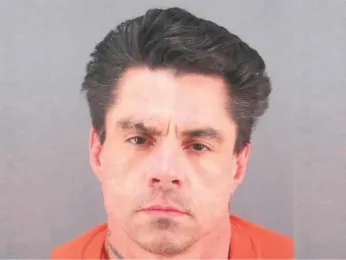
A man previously convicted of killing a gay hair stylist whose homicide and robbery convictions were overturned more than a year ago is going to wait a little longer for his case to be retried. As jury selection was underway in San Francisco Superior Court Monday, defendant James Rickleffs fired his attorney and is seeking new counsel.
The 2019 conviction of Rickleffs, 58, had been reversed in October 2023 by a California Court of Appeal three-judge panel. He'd been found guilty in the 2012 killing and robbery of Steven "Eriq" Escalon in San Francisco's Diamond Heights neighborhood. As the Bay Area Reporter previously reported, a new trial was set for this summer.
And indeed over 100 prospective jurors were waiting to see if they’d be selected August 18 when Rickleffs decided to fire his private attorney, Michael Meehan, according to Edward Mario of the San Francisco District Attorney’s office, who described the events in Department 22 at San Francisco’s Hall of Justice, 850 Bryant Street, during a hearing August 19.
Rickleffs then “indicated he needed time to hire private counsel,” Mario said, “so the jurors on the panel were dismissed and we were sent back here today.”
No jurors had been selected yet; but the jury panel refers to the group of potential jurors selected from the pool called for jury duty. After voir dire, a smaller number are selected to actually serve as jurors or alternates. Voir dire was supposed to begin August 18.
Rickleffs, who remains in custody, apologized for the inconvenience. San Francisco Superior Court Judge Harry L. Jacobs remarked that, “I’m not inconvenienced. How much time do you need, realistically?”
Rickleffs said he didn’t “want to come up empty-handed,” and both Jacobs and Rickleffs agreed a month would be reasonable. The matter was set for Department 22 at 9 a.m. September 23, for the appearance of the new counsel.
Meehan stated to the B.A.R. August 19 that the court granted Rickleffs’ request that he be fired because the defendant “stated that he would no longer communicate with me as his attorney.”
“The court explained to Mr. Rickleffs that he had been well defended to that point, but [Judge Alexandra Robert Gordon] felt she had to grant his request even though we were in a jury trial because he was not going to communicate with his counsel going forward,” Meehan said.
Meehan did not answer a question about why Rickleffs said he fired him.
A friend of Escalon’s didn’t return a request seeking comment.
Randy Quezada, communications director for the DA's office, told the B.A.R. August 18 that due to the change in attorneys, “This case is not going to trial any time soon.”
Rickleffs was sentenced in 2021 to 50 years to life in state prison. That conviction, however, was overturned by a state appellate court two years ago.
The Fifth Division of the state's 1st District Court of Appeal ruled October 24, 2023 – in an opinion written by Justice Mark B. Simons – that "appellant's murder conviction is reversed, although the People may accept a reduction of the conviction to involuntary manslaughter. Appellant's conviction of robbery is reversed, although the People may accept a reduction of the conviction to petty theft."
The appellate court panel gave several reasons for its decision. For one, a California Supreme Court ruling in People v. Brown (2023) threw out the very jury instructions for a murder by poison charge that were used in Rickleffs' case.
Simons also questioned the forensic evidence presented at trial – including a key NMS Labs report that found nitrates and gamma-hydroxybutyric acid (GHB) in Escalon's system.
Simons stated that the instructions on the robbery charge were also wrong because Escalon rendered himself unable to resist.
"Whether Escalon tied himself up ... or whether appellant tied him up at his request, Escalon would have knowingly and willingly taken action to render himself unable to resist," Simons stated. "In either instance, his resistance would not have been overcome ... without the voluntary cooperation of the subject whose resistance is repressed. ... We thus agree with appellant that the force required for a robbery must be non-consensual and the court erred in failing to so instruct the jury."
Simons was joined in the opinion by Justices Gordon Burns and Danny Chou.
The original charges stem from 2012, when, according to prosecutors, Escalon and Rickleffs met during underwear night at the bar 440 Castro in San Francisco's LGBTQ neighborhood.
"Rickleffs, as a straight-identifying man, went to the Castro with tape and a knife, sat there drinking, and, I believe, snorted narcotics in the bathroom, waiting for someone," Escalon's friend Roberto Tiscareno said during the August 2021 sentencing hearing.
After going home with Escalon to his Diamond Heights apartment near Twin Peaks early on the morning of June 12, 2012, prosecutors said Rickleffs tied Escalon up, gagged him, and poured poppers on his face to immobilize him. Then he left Escalon's apartment with a suitcase of items including a laptop, Escalon's checkbook, and a bankcard of one of Escalon's roommates.
Escalon died of an overdose of amyl nitrates and GHB, according to the medical examiner's report. He was found dead by his roommates, and Rickleffs was arrested September 12, 2012, in possession of the suitcase.
The jury explained their reasoning behind their 2019 decision to convict. Most said that they felt Escalon's death was caused by many factors, including the obstruction of his breathing from the gag, his inability to move from being bound, and the drugs found in his system. They did say, however, that although they unanimously agreed that Rickleffs did not intend to kill Escalon, it was the robbery and disregard for human life that swayed them to find him guilty of felony murder.
Updated, 8/19/25: This article has been updated to clarify the jury selection status.